The Problem: After knee replacement surgery, clinicians have limited visibility into how patients recover at home. Follow-ups are infrequent, and available data (e.g., AI-assisted guided-video analysis) is often fragmented and difficult to interpret.
As a result:
• Delayed recovery may go unnoticed
• Clinicians spend time reviewing low-priority cases
• Decision-making is reactive instead of proactive
The Goal: Design a clinician-facing system that helps care teams quickly determine:
• Which patients are recovering normally, and which need attention
My Role: UX / UI Researcher & Designer - Human Factors Engineer
My Responsibilities:
• Problem framing and system definition
• Workflow design and user flow mapping
• Information architecture (IA)
• Interaction and dashboard design (next phase)
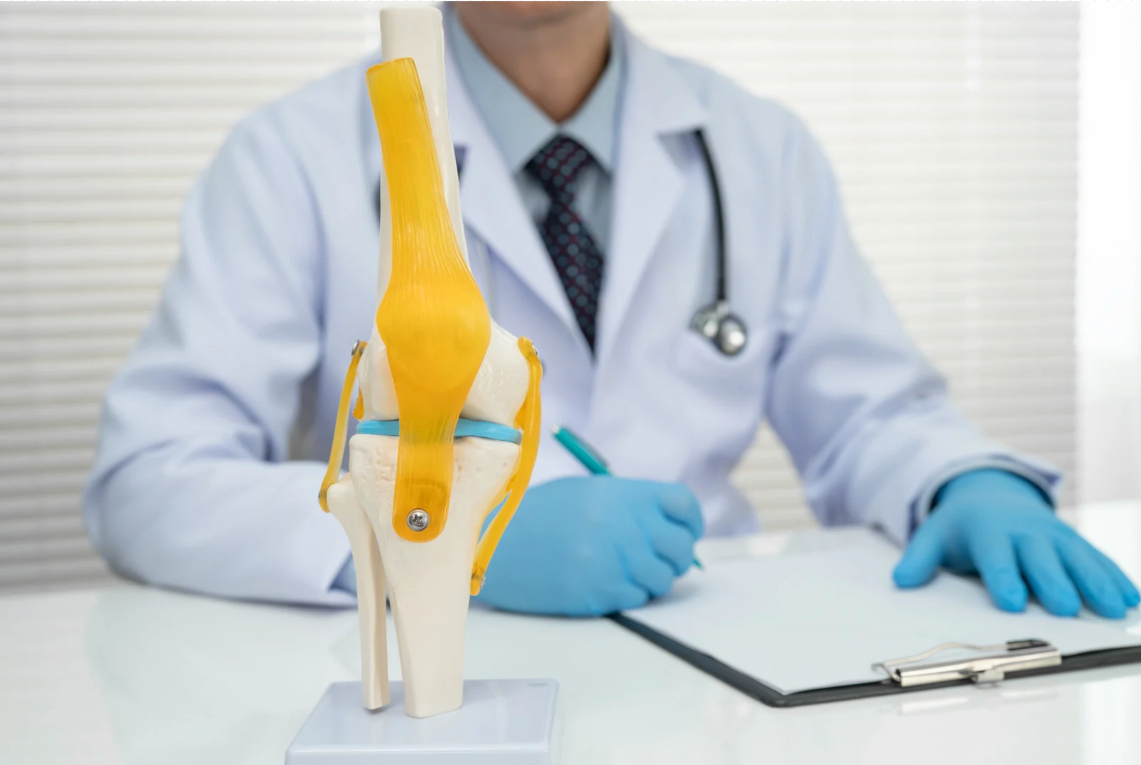
Project at a Glance
Problem: Post-surgical recovery monitoring is fragmented and reactive
Solution: A triage-focused system that translates recovery data into clear, actionable insights
Process: Concept → Workflow design → Information architecture (IA) → Prototyping (next)
Outcome (so far): A structured, clinically realistic workflow that supports fast, confident decision-making (in progress)
_________________________________________________________________________________________
Why This Project?
This project explores how UX design can support decision-making in a clinical context where data is incomplete, time is limited, and the cost of missed signals is high.
Rather than focusing on advanced analytics, the goal is to design a system that simplifies complexity and helps clinicians act quickly and confidently.
_________________________________________________________________________________________
Users & Context
Primary user
• Nurse Navigator / Care Coordinator (daily monitoring)
Secondary users
• Physical Therapist (PT) (functional recovery review)
• Orthopedic Surgeon (exception handling)
Supporting user
• Patient (data input via guided-video, and short surveys)
Patients interact with a lightweight interface focused on simple data submission rather than complex navigation.
Context
• First 4–6 weeks after surgery
• Home-based recovery with AI-assisted guided-video analysis, and survey inputs
• Time-constrained, high-responsibility environment
_________________________________________________________________________________________
What PostOp Knee Is (and Is Not)
It IS:
• A post-discharge recovery monitoring system
• Focused on triage and prioritization
• Designed for fast clinical decision-making
• Based on approximate, real-world data
It is NOT:
• A diagnostic tool
• A full electronic health record (EHR) system
• A rehabilitation program
• A high-precision biomechanics platform
_________________________________________________________________________________________
Key Design Principle
The system prioritizes:
• Clear patient status
• Explainable alerts
• Minimal cognitive load
• Fast decision-making
_________________________________________________________________________________________
Ideate
Instead of designing a data-heavy dashboard, I focused on a decision-driven workflow:
• Identify high-risk patients first
• Understand the reason quickly
• Take action or escalate
• Move efficiently through multiple patients
_________________________________________________________________________________________
Core Workflow Design
Workflow Structure
The system is built around three connected workflows:
1. Daily Triage: Identify patients needing attention
2. Patient Review & Decision: Understand the situation
3. Coordination & Escalation: Take action or hand off
_________________________________________________________________________________________
Workflow Mapping
To translate the system concept into a practical and realistic solution, I developed a set of interconnected workflows for each user role in the care process (Figures 1-4).
These workflows define how information flows through the system, how decisions are made, and how responsibilities are transferred across the care team. They also help ensure that the design supports real-world clinical coordination, rather than isolated user interactions.
The following diagrams illustrate the workflows for each key role:
1. Nurse: Primary triage and coordination (Figure 1)
2. Physical Therapist: Functional assessment and intervention planning (Figure 2)
3. Orthopedic Surgeon: Exception-based clinical decision-making (Figure 3)
4. Patient: Guided data submission and communication (Figure 4)
Together, these workflows establish a structured, repeatable process for:
• Identifying at-risk patients
• Interpreting recovery signals
• Taking appropriate action
• Coordinating care across roles
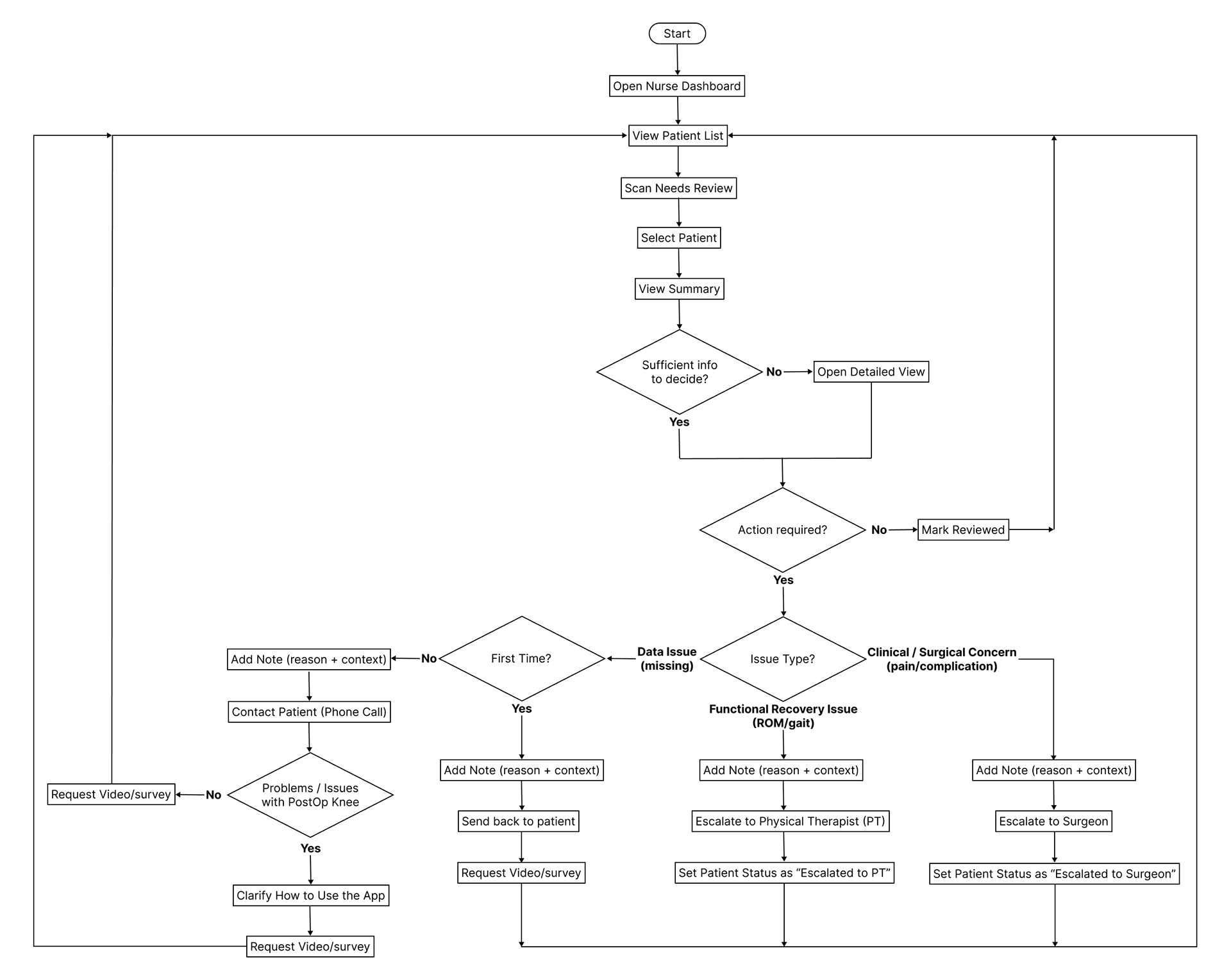
Figure 1. Nurse workflow illustrating triage, decision-making, and coordination across patient recovery scenarios.
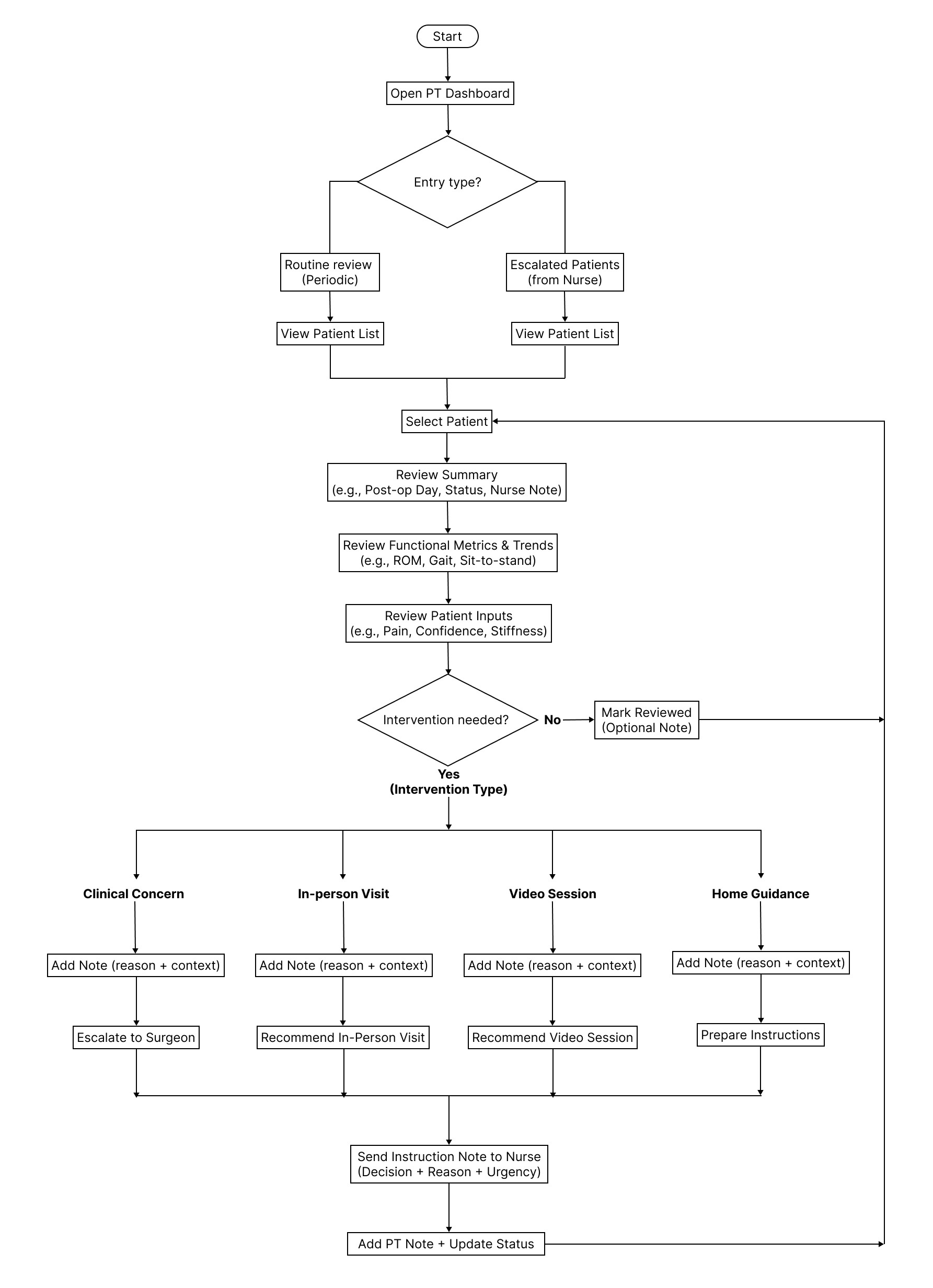
Figure 2. Physical therapist workflow illustrating dual-entry review (escalation and routine), functional assessment, intervention decision-making, and coordinated handoff to the care team.
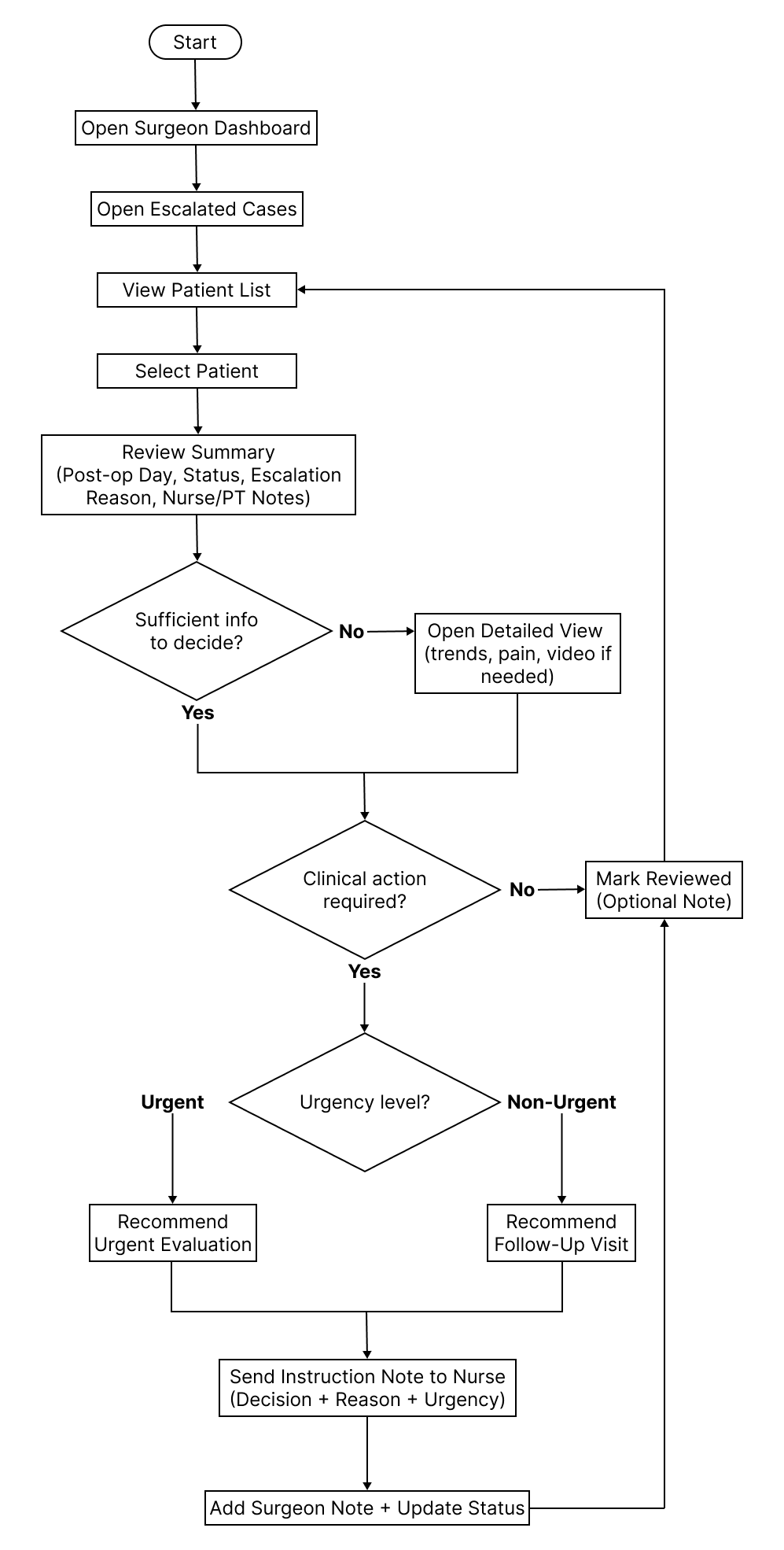
Figure 3. Surgeon workflow illustrating escalation-based review, rapid clinical decision-making, and coordinated follow-up through the care team.

Figure 4. Patient workflow illustrating guided data submission through video-based assessment and brief self-report, with minimal interaction and clear communication with the care team.
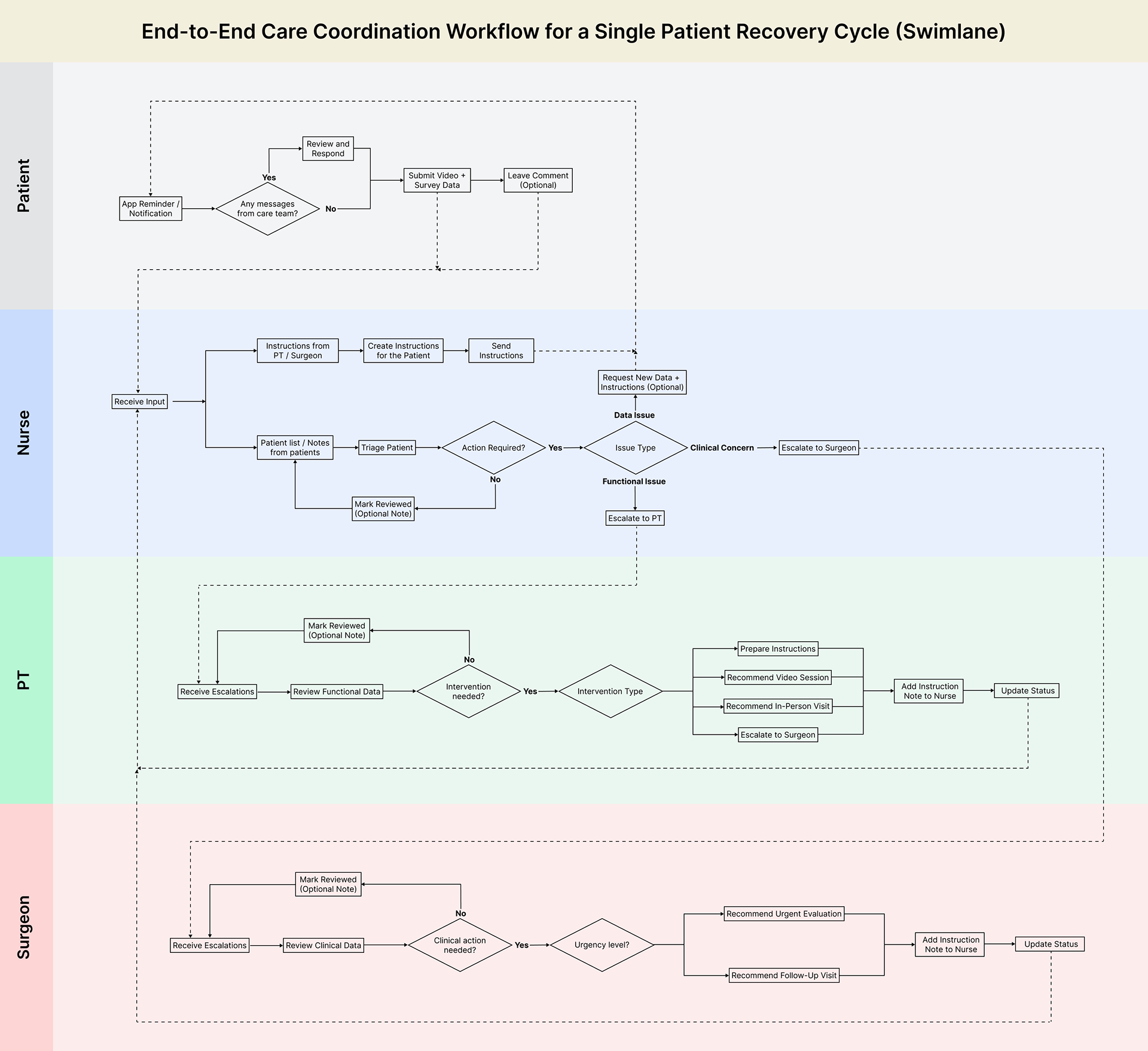
Figure 5. End-to-end care coordination workflow for a single patient recovery cycle, illustrating how patient data flows through nurse triage, physical therapy assessment, and surgeon decision-making, with coordinated actions routed back through the nurse.
_________________________________________________________________________________________
Design Rationale
The workflow was designed to:
• Prioritize high-risk patients first
• Reduce unnecessary deep review
• Support clear ownership transfer (nurse → PT → surgeon)
• Handle real-world uncertainty (missing or conflicting data)
• Maintain a fast, repeatable decision loop
_________________________________________________________________________________________
Key Design Insights
Triage is more important than detail
• Clinicians need to know who to look at first, not just see more data
• Clinicians need to know who to look at first, not just see more data
Ownership must be clear
• Each issue is handled by the appropriate role (nurse, PT, surgeon)
• Each issue is handled by the appropriate role (nurse, PT, surgeon)
Data is imperfect
• The system must support decisions with incomplete or low-confidence inputs
• The system must support decisions with incomplete or low-confidence inputs
Workflow matters more than features
• A well-structured flow is more valuable than adding more metrics
• A well-structured flow is more valuable than adding more metrics
_________________________________________________________________________________________