The Problem: Musculoskeletal disorders are prevalent among surgeons and often begin early in training. Despite growing awareness, ergonomic principles are not consistently embedded into surgical education, limiting early adoption of safer postural practices.
The Goal: Support early ergonomics education by redesigning an existing surgical ergonomics module and developing clear, visually guided instructional posters that translate ergonomic principles into actionable guidance for surgical trainees.
My Role: UX / Human Factors Researcher - Human Factors Engineer (Mayo Clinic, Rochester, MN, USA)
My Responsibilities:
• Contributed to the redesign of a surgical ergonomics educational module
• Contributed to the development and evaluation of modality-specific instructional posters
• Collaborated with a medical illustrator to translate ergonomic guidance into visual form
• Conducted surgical trainee feedback sessions and synthesized insights
• Advised on information architecture, content sequencing, and usability
• Reviewed and tested the module for clarity, usability, and technical issues
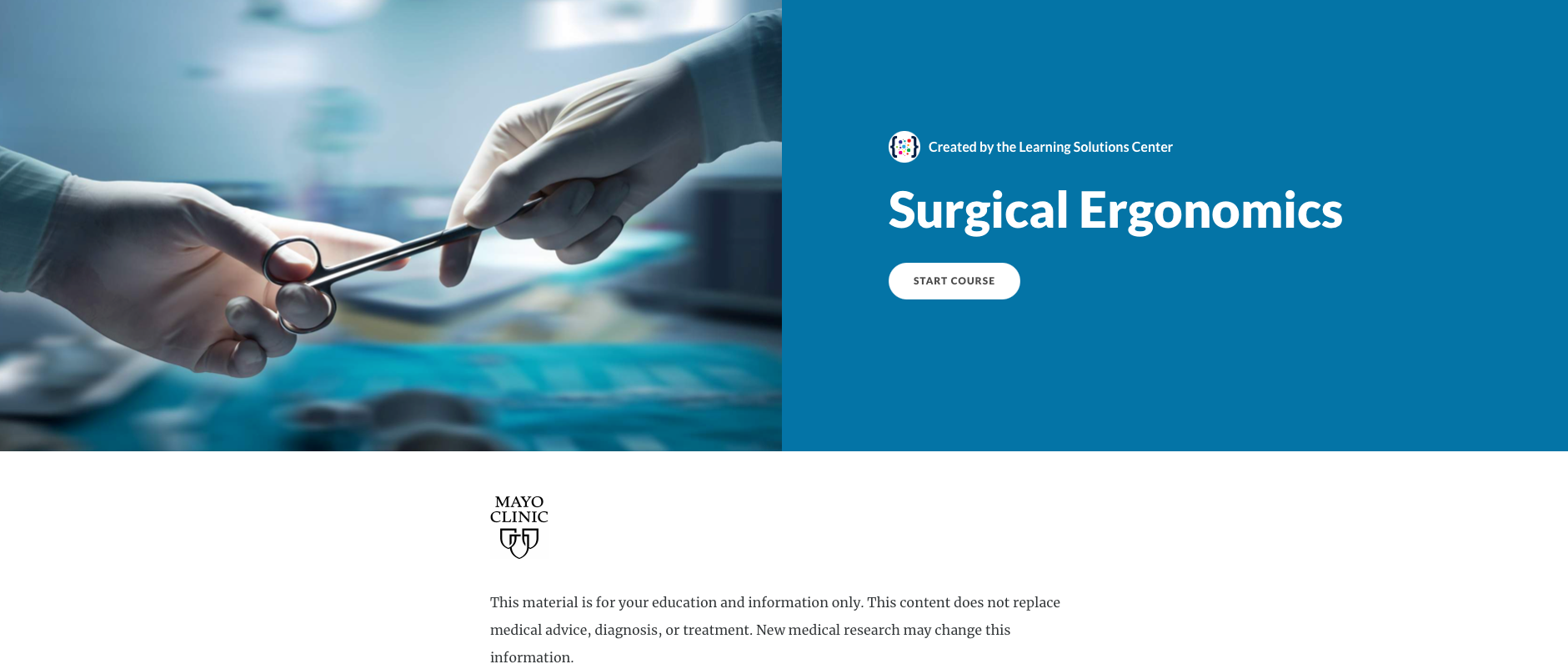
Project at a Glance
Problem: Surgeons experience high rates of musculoskeletal disorders, yet ergonomic principles are often introduced late in training or not consistently integrated into routine practice.
Solution: A human-centered educational module, supported by modality-specific instructional posters, designed to teach surgical ergonomics early in training and promote safer posture awareness.
Process: Content review → poster design & illustration → trainee feedback → iterative refinement → module integration
Outcome: A redesigned educational module with embedded ergonomic posters, published online to support early, practical ergonomics education for surgical trainees.
_________________________________________________________________________________________
Key Contributions
1. Ergonomic Instructional Posters
Three instructional posters were developed, each tailored to a surgical modality:
• Open surgery
• Laparoscopic surgery
• Robotic surgery
Each poster communicated ergonomic recommendations using a clear “recommended vs. to avoid” structure, informed by feedback from surgical trainees.
An iterative process was used:
• Initial content definition by the human factors team
• Illustration development in collaboration with a Mayo Clinic illustrator
• One-on-one feedback sessions with surgical trainees at the simulation center
• Multiple refinement cycles based on usability, clarity, and content feedback
Equity considerations were intentionally incorporated across the poster set, ensuring representation of different genders, skin tones, and racial backgrounds.
2. Educational Module Redesign & Review
In parallel, I collaborated with the Mayo Clinic educational design team to support the redesign of an existing online educational module (Figures 1-3).
My contributions included:
• Providing subject-matter expertise in surgical ergonomics
• Advising on module structure, chapter organization, and learning flow
• Reviewing educational imagery and posture examples
• Evaluating usability, clarity, and technical issues during testing
Due to institutional regulations limiting placement of materials inside operating rooms, the posters were ultimately embedded within the educational module as a scalable and accessible alternative (Figure 2).
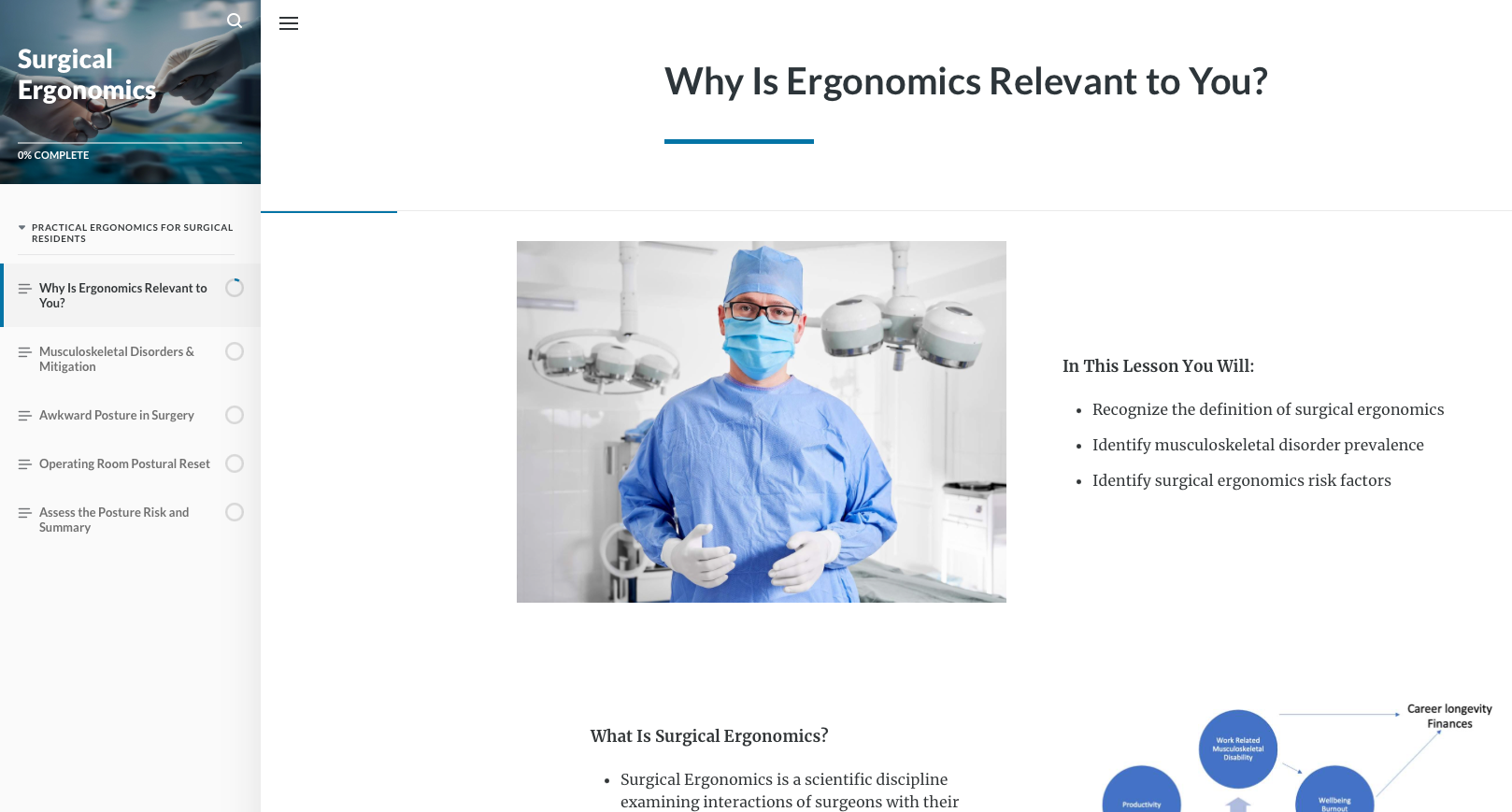
Figure 1. Screenshot of the Surgical Ergonomics educational module, organized into five instructional sections. For additional details, please refer to the live module.
_________________________________________________________________________________________
Design & Learning Insights
Visual clarity matters
• Trainees preferred clear, side-by-side examples of safe versus risky postures.
Early education is critical
• Introducing ergonomics before independent practice supports habit formation.
Contextual relevance improves engagement
• Modality-specific guidance resonated more strongly than generic recommendations.
Equity and representation matter
• Diverse visual representation increased relatability and inclusivity.
Institutional constraints shape design
• Embedding posters within digital education enabled broader dissemination despite physical placement limitations.
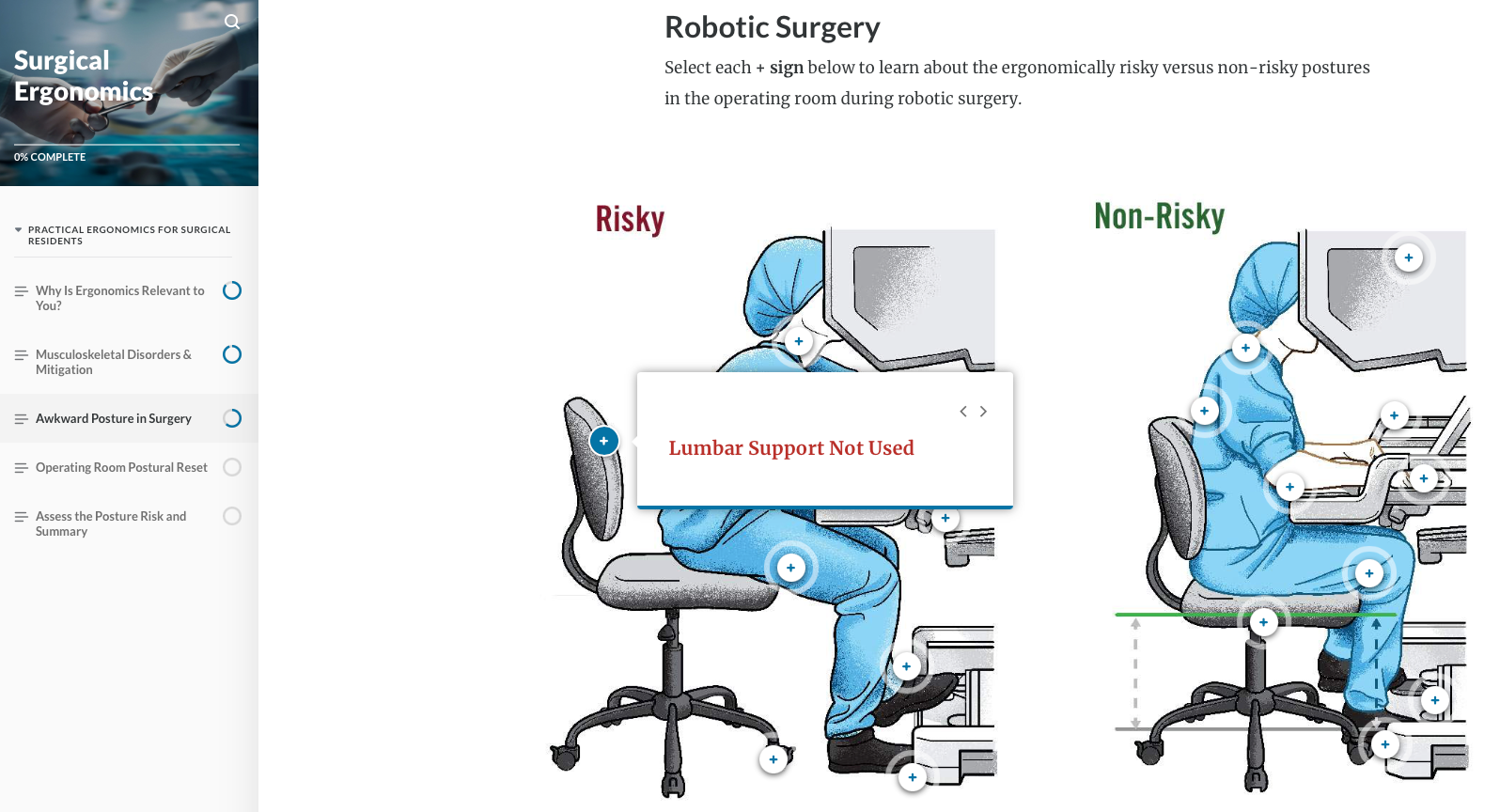
Figure 2. Ergonomic posture guidance for robotic surgery presented within the Surgical Ergonomics educational module. Skin tone diversity will be incorporated in later iterations of the instructional materials.
_________________________________________________________________________________________
Outcome & Impact
• Finalized a set of three modality-specific ergonomic posters
• Integrated posters into a redesigned, publicly available educational module
• Supported Mayo Clinic’s efforts to promote early ergonomics education for surgical trainees

Figure 3. Example of end-of-course evaluation questions focused on identifying awkward postures within the Surgical Ergonomics educational module.
_________________________________________________________________________________________
Reflection
This project reinforced the importance of preventive, education-focused design in safety-critical domains. Unlike tools evaluated later in practice, educational interventions must balance accuracy, clarity, and engagement while fitting within institutional constraints.
Key takeaways that continue to inform my work:
• Early exposure is critical for shaping long-term ergonomic behavior
• Visual communication plays a central role in translating complex principles into action
• Human-centered design must account for equity, context, and real-world deployment constraints