The Problem: Surgeons experience high physical and cognitive strain during long procedures, yet ergonomic tools must integrate seamlessly into surgical workflow to be adopted.
The Goal: Evaluate how effectively OR-Stretch, an app for taking microbreaks, supports surgeons during real operating room workflows and identify usability factors that influence adoption in safety-critical settings.
My Role: Study Designer / UX Researcher / Human Factors Specialist (Mayo Clinic, Rochester, MN, USA)
My Responsibilities: Led the usability evaluation of OR-Stretch in real operating room settings, designed the research approach, synthesized surgeon feedback, and translated findings into actionable UX and workflow recommendations.

Project at a Glance
Problem: High physical and cognitive demands in surgery require ergonomic tools that fit seamlessly into surgical workflow.
Solution: A usability-driven evaluation of the OR-Stretch web app to understand how intraoperative microbreak reminders fit into real operating room workflows.
Process: In-situ evaluation → surgeon feedback → usability analysis → design recommendations
Outcome: Clear usability insights and workflow-aligned design recommendations to support adoption in safety-critical environments.
_________________________________________________________________________________________
Users & Context
• Attending surgeons across multiple surgical specialties
• Long, high-cognitive-load procedures
• Sterile, interruption-sensitive, team-based environment
_________________________________________________________________________________________
What is OR-Stretch?
OR-Stretch is a free web-based tool that prompts short, guided intraoperative stretching microbreaks to help surgeons reduce fatigue and discomfort without breaking the sterile field (Figures 1-3).
• Provides brief (~70-second) guided stretch videos
• Allows configurable reminder intervals (e.g., every 30-120 minutes)
• Designed for use during live surgical procedures with minimal workflow disruption
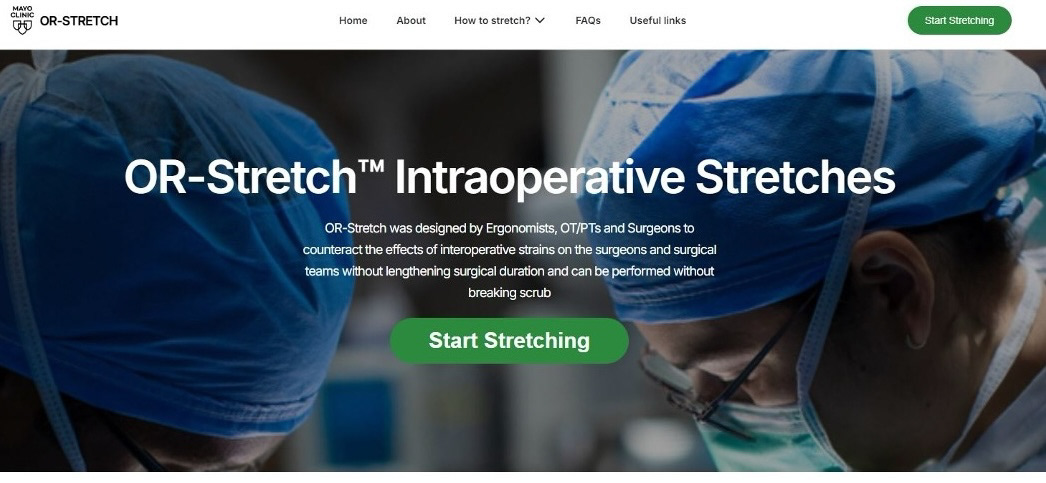
Figure 1. OR-Stretch website hosting the OR-Stretch web application developed at Mayo Clinic (Rochester, MN, USA).
_________________________________________________________________________________________
Key Usability Insights
1. Timing matters more than frequency
Time-based reminders helped surgeons maintain awareness, but rigid alerts often conflicted with critical moments in surgery.
Design implication
• Reminders should align with workflow context, not fixed time alone.
• Reminders should align with workflow context, not fixed time alone.
2. Less frequent reminders fit long procedures better
Surgeons found 60-minute reminders easier to integrate than 30-minute reminders, especially in long or complex cases.
Design implication
• Break frequency should adapt to procedure length and complexity.
• Break frequency should adapt to procedure length and complexity.
3. Workflow disruption outweighs physical benefit
Even when surgeons reported physical or mental benefits, they were unlikely to continue using the system if it disrupted surgical flow.
Design implication
• In safety-critical systems, workflow compatibility is the primary driver of adoption.
• In safety-critical systems, workflow compatibility is the primary driver of adoption.
4. Team-based control reduces interaction burden
Surgeons preferred minimal or delegated interaction, such as having a team member manage the system during surgery.
Design implication
• Support team-based or low-effort interaction models rather than direct surgeon control.
• Support team-based or low-effort interaction models rather than direct surgeon control.
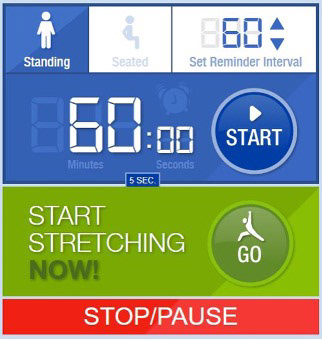
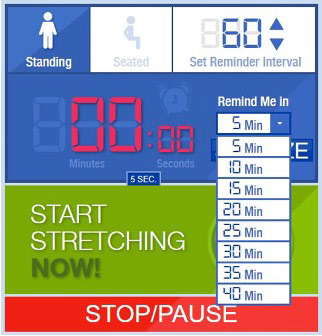
Figure 2. OR-Stretch web application showing the start screen with an adjustable reminder timer (left) and a configurable snooze option (right).
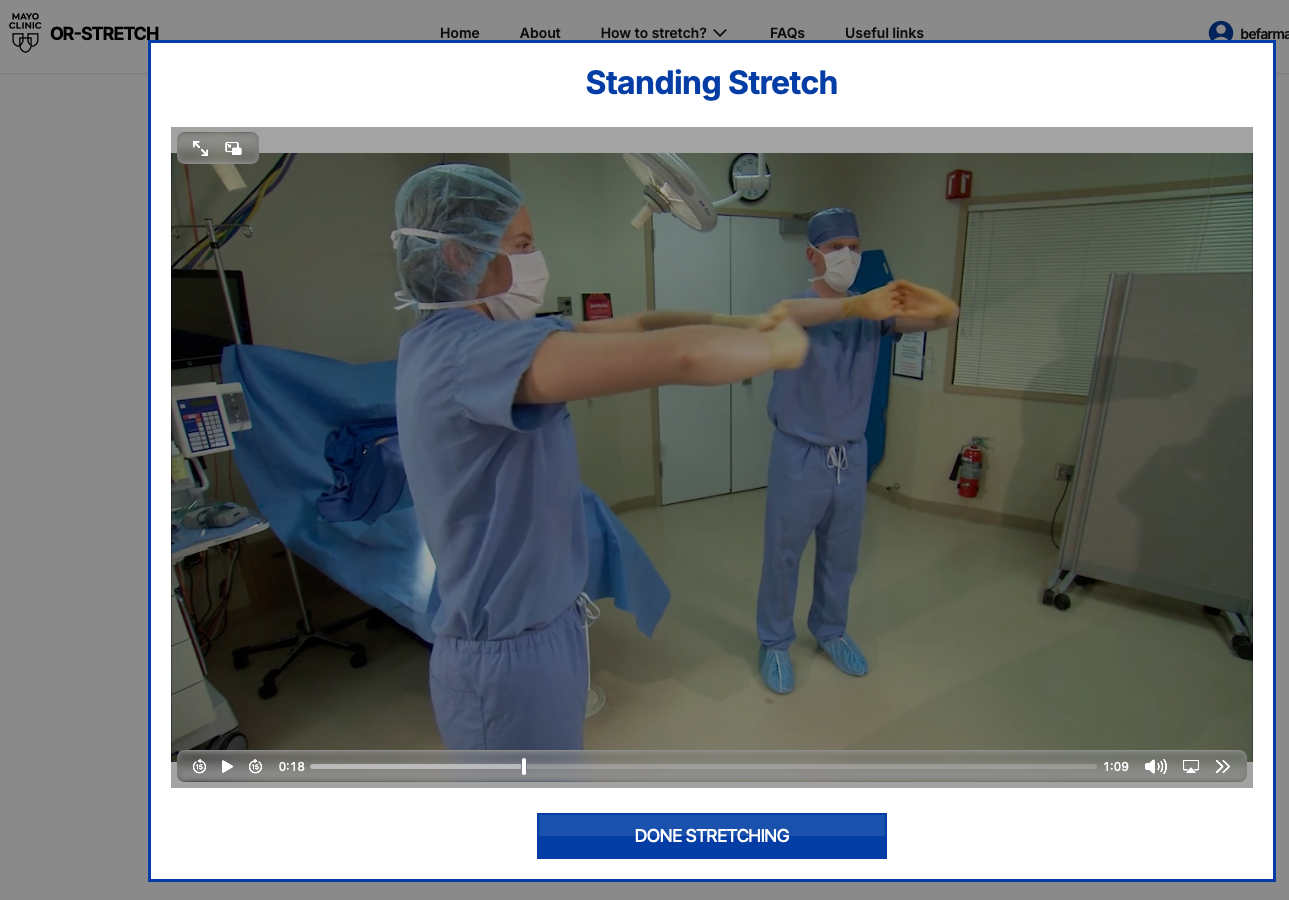
Figure 3. Example of OR-Stretch microbreak stretching instructions performed in a standing position.
_________________________________________________________________________________________
Design Implications & Outcomes
Based on usability findings and surgeons' feedback, I synthesized a set of design and workflow implications focused on improving adoption and real-world usability of OR-Stretch in a safety-critical environment.
Rather than optimizing features in isolation, these recommendations emphasize timing, interaction cost, and workflow compatibility.
1. Align reminders with surgical workflow, not fixed time alone
Rigid, time-based reminders increased awareness but sometimes conflicted with critical surgical moments.
Rigid, time-based reminders increased awareness but sometimes conflicted with critical surgical moments.
• Support flexible reminder timing aligned with natural workflow transitions
• Allow surgeons or teams to adjust reminder behavior based on procedure complexity
2. Minimize interaction cost to near zero
Even small interactions (extra clicks, screen adjustments) were perceived as friction during surgery.
Even small interactions (extra clicks, screen adjustments) were perceived as friction during surgery.
• Reduce the number of steps required to start, snooze, or stop reminders
• Improve default behaviors (e.g., automatic full-screen playback)
3. Enable team-managed control models
Direct interaction by the surgeon was not always desirable. Surgeons preferred systems that leveraged the operating room team.
Direct interaction by the surgeon was not always desirable. Surgeons preferred systems that leveraged the operating room team.
• Support delegated control by circulating nurses or designated staff
• Design for continuity across staff handoffs
4. Treat micro-frictions as first-order design issues
Seemingly minor usability details became adoption barriers under cognitive load.
Seemingly minor usability details became adoption barriers under cognitive load.
• Prioritize clarity, default behavior, and interaction efficiency
• Address small frictions early, as they accumulate quickly in real use
These insights informed discussions around improving OR-Stretch’s usability and long-term integration into surgical practice.
_________________________________________________________________________________________
Reflection
This project reinforced that usability in safety-critical environments is inseparable from workflow.
Even effective tools fail if they interrupt timing, attention, or team dynamics.
Even effective tools fail if they interrupt timing, attention, or team dynamics.
Key takeaways that shape my UX/UI practice:
• Small frictions become major barriers under cognitive load
• Adoption depends more on context than features
• Designing for teams is often more important than designing for individuals
_________________________________________________________________________________________